Now Reading: Ginger Benefits for Hair: Uses, Evidence, and How to Apply It
-
01
Ginger Benefits for Hair: Uses, Evidence, and How to Apply It

Ginger is best known as a kitchen spice, but it also appears in shampoos, scalp oils, hair masks, and other beauty products. This has led many people to explore whether ginger can help with dryness, dandruff, or hair loss.
Ginger contains plant compounds like gingerols and shogaols. Studies show these have antioxidant, anti-inflammatory, and antimicrobial effects. However, this does not mean ginger will make hair grow. It’s important to know the difference between possible scalp benefits and proven hair growth results when considering ginger.

Is ginger beneficial for your hair?
When discussing ginger’s benefits for hair, it makes more sense to view it as a possible ingredient for scalp care and cosmetics, not as a proven way to promote hair growth.
A scientific review from 2024 stated that ginger includes compounds such as gingerol, shogaols, paradol, and zingerone, which have antioxidant and anti-inflammatory properties. Further research has found that gingerols and shogaols possess antimicrobial properties.
These properties make ginger interesting for cosmetic products, but most research does not show that putting ginger on your scalp will make hair grow faster.
6 Potential Ginger Benefits for Hair and Scalp
1. Provides Antioxidant Compounds
People often talk about ginger’s benefits for hair because it contains many different compounds. Research has found that gingerols and shogaols have antioxidant effects.
A study in the Journal of Ethnopharmacology found that several gingerols and 6-shogaol showed antioxidant activity in lab tests. While antioxidants can help fight oxidative stress, this does not mean that using ginger on your hair will prevent hair loss.
Think of antioxidant activity as just one interesting aspect of ginger, not as proof that it will make your hair thicker.
2. May help to maintain a healthy scalp environment
Ginger is often used in scalp products because it has anti-inflammatory properties.
Research reviews show that ginger compounds can reduce inflammation in several ways. However, most of this evidence comes from lab and experimental studies, not from clinical trials on people’s scalps.
If you have serious scalp inflammation, eczema, psoriasis, or another scalp condition, it’s best to use proper medical treatment instead of relying on ginger.
3. Has Antimicrobial Properties
Another possible benefit of ginger for hair is its antimicrobial activity.
A scientific review of the biological properties of gingerols and shogaols includes their antimicrobial activity.
This does not mean that homemade ginger juice can treat scalp infections or dandruff. Lab results do not prove that DIY treatments are safe or effective for people.
4. It can form part of products used for cleansing the scalp.
Ginger is added to shampoos and scalp cleansers to help your scalp feel fresh and clean.
Regular hair washing removes extra oil, sweat, styling products, and debris, which keeps your scalp healthy. You can use a ginger shampoo as part of your routine if it works well for your skin and hair.
Ginger does not detoxify hair follicles, and you do not need to scrub your scalp hard for a product to work.
5. Effective for conditioning hair products.
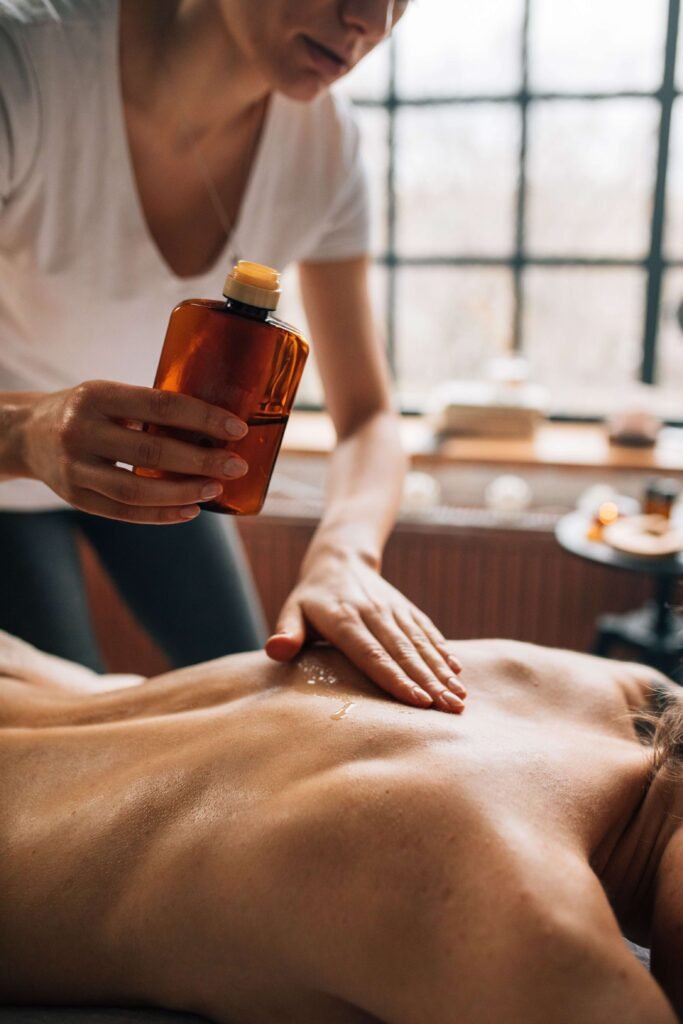
Some people mix ginger with carrier oils like coconut or jojoba oil, which can make dry hair feel softer and easier to manage.
It’s important to separate the effects of ginger from those of the carrier oil. If a ginger oil makes your hair smoother, most of the conditioning may come from the oil, not the ginger.
The cosmetic benefits attributed to ginger for the hair might instead refer to effects on the hair follicle.
6. May Contribute to Hair Appearing Healthier
Just because hair looks healthy does not mean it is growing faster.
A well-made ginger shampoo, conditioner, or oil can help your hair feel cleaner, smoother, or easier to style. Keeping your scalp comfortable can also improve your hair care routine.
These cosmetic benefits are real, but they should not be confused with proven hair regrowth.
Does ginger aid in hair growth?
It’s important to be careful with claims about ginger’s benefits for hair.
Right now, there is no strong clinical evidence that using ginger makes human hair grow faster. In fact, one well-known study found the opposite.
A study from 2013 that was published in PLOS One looked at 6-gingerol, which is a major active ingredient in ginger. It was found that the compound inhibited hair-shaft growth in cultured human hair follicles and decreased the proliferation of dermal papilla cells. The researchers also noticed a suppression of hair growth in mice.
This does not mean that regular ginger shampoo causes hair loss, since the study tested a specific ginger compound in controlled conditions. Still, claims that ginger always ‘stimulates hair follicles’ should be viewed with caution.
At the moment, no scientific timeline has been established whereby ginger will regrow human hair.
Can ginger help with dandruff?
People are interested in using ginger for dandruff because of its antimicrobial properties. However, there is still very little solid evidence that ginger treats dandruff in people.
Dandruff can have many causes, like scalp oil or reactions with Malassezia yeast. Even though ginger compounds show antimicrobial effects in lab studies, this does not prove that homemade ginger treatments work for dandruff.
If your dandruff is persistent, severe, or comes with a lot of redness or itching, it’s best to use proven treatments or see a dermatologist.
How to Use Ginger for Hair
If you want to try ginger for your hair, it’s better to use a gentle approach instead of putting highly concentrated ginger directly on your scalp.
Ginger-Infused Hair Oil
A carrier oil with ginger is less concentrated than ginger essential oil. Use a small amount as directed on the product, and rinse it off if needed.
Leaving it on overnight will not necessarily give better results.
Ginger Shampoo or Conditioner
Commercial ginger shampoos and conditioners are an easy choice because the ingredients are already measured out in safe amounts.
Follow the label instructions when using these products, and stop if you notice itching, burning, or redness.
Ginger Hair Mask
You can choose a hair mask with ginger instead of putting raw ginger juice directly on your scalp.
Hair masks are mainly for cosmetic conditioning, so keep your expectations realistic.
Fresh ginger versus ginger oil for hair
You should not substitute one ginger product for another.
| Ginger Product | What to Know |
| Fresh ginger | Concentrated juice may irritate sensitive skin |
| Ginger essential oil | Highly concentrated and requires appropriate dilution |
| Ginger-infused oil | Usually less concentrated and includes a carrier oil |
| Ginger shampoo | Convenient option for regular washing |
| Ginger conditioner/mask | Mainly useful for cosmetic hair care |
If you’re considering ginger for your hair, remember that ‘natural’ does not always mean gentle or safe for everyone’s scalp.
How frequently should ginger be used on your hair?
There is no proven schedule for using ginger to grow hair, since it has not been shown to help hair growth in humans.
With commercial ginger products, follow the manufacturer’s instructions. When trying a new product, start slowly and watch for any signs of irritation.
Using more ginger or applying it more often will not necessarily give better results.
Ginger for Hair Side Effects and Safety
For some people, using ginger or ginger products on the skin can cause burning, redness, itching, or irritation.
It’s a good idea to do a patch test with any new cosmetic product to check for sensitivity. Never put concentrated ginger essential oil directly on your scalp unless it has been properly diluted.
Do not use ginger products on broken or very irritated skin. Stop using the product if you have ongoing burning, swelling, a rash, or any serious irritation.
A comparison between ginger and established hair-loss treatments
If you are looking into ginger because you have ongoing hair loss, it’s more important to find out the cause than to try many home remedies.
For instance, the American Academy of Dermatology states that topical minoxidil is an FDA-approved option for the treatment of male pattern hair loss; clinical studies have demonstrated that it can reduce hair loss and cause some hair growth, although the results differ.
If your hair loss is sudden, patchy, or has no clear cause, see a professional. Hair loss can be caused by nutrition, medical conditions, medications, genetics, or scalp disorders.
Frequently Asked Questions
Does ginger cause hair to grow more quickly?
There is no strong clinical evidence from human studies that ginger makes hair grow faster. In fact, research on 6-gingerol found it may actually slow hair growth.
Can I put some freshly grated ginger on my scalp?
Raw ginger juice is strong and may irritate sensitive skin. A properly formulated ginger cosmetic product is a safer, more controlled option.
Can ginger halt hair loss?
There is not enough evidence that ginger treats common causes of hair loss. Any ongoing or sudden hair loss should be checked by a healthcare professional or dermatologist.
Can ginger help with dandruff?
Ginger has shown antimicrobial properties in lab research, but this does not prove it is an effective dandruff treatment for people.
How long does it take for ginger to grow hair?
There is no set timeline, and current evidence does not show that using ginger on your scalp reliably causes hair to regrow.
Final Thoughts
The evidence for ginger’s benefits is stronger for its antioxidant, anti-inflammatory, and antimicrobial properties than for actual hair regrowth.
If your scalp can handle them, ginger shampoos, oils, and conditioners can be part of your regular hair care routine. However, ginger is not a proven treatment for hair loss. Keep your expectations realistic, use products carefully, and seek professional advice if you have ongoing hair loss.
Helpful YouTube Resource
Here’s a helpful video:
References
1. Miao Y, et al. — 6-Gingerol Inhibits Hair Shaft Growth in Cultured Human Hair Follicles and Modulates Hair Growth in Mice
https://pubmed.ncbi.nlm.nih.gov/23437345/
2. Ayustaningwarno F, et al. — A Critical Review of Ginger’s Antioxidant, Anti-inflammatory, and Immunomodulatory Activities
https://pubmed.ncbi.nlm.nih.gov/38903613/
3. Semwal RB, et al. — Gingerols and Shogaols: Important Nutraceutical Principles from Ginger
https://pubmed.ncbi.nlm.nih.gov/26228533/
4. Dugasani S, et al. — Comparative Antioxidant and Anti-inflammatory Effects of Gingerols and 6-Shogaol
https://pubmed.ncbi.nlm.nih.gov/19833188/
5. Maghraby YR, et al. — Gingerols and Shogaols: Extraction, Formulation and Applications
https://pubmed.ncbi.nlm.nih.gov/38144766/
6. American Academy of Dermatology — Male Pattern Hair Loss: Diagnosis and Treatment
https://www.aad.org/public/diseases/hair-loss/treatment/male-pattern-hair-loss-treatment

Hi, I’m Kristi Jenkins, a passionate blogger and content writer with a love for storytelling. With years of experience in writing engaging and insightful articles, I focus on topics like mental health, lifestyle, and personal growth. My goal is to create content that inspires, educates, and connects with readers on a deeper level.