Now Reading: Full Body Workout Program: 3-Day Strength Plan
-
01
Full Body Workout Program: 3-Day Strength Plan
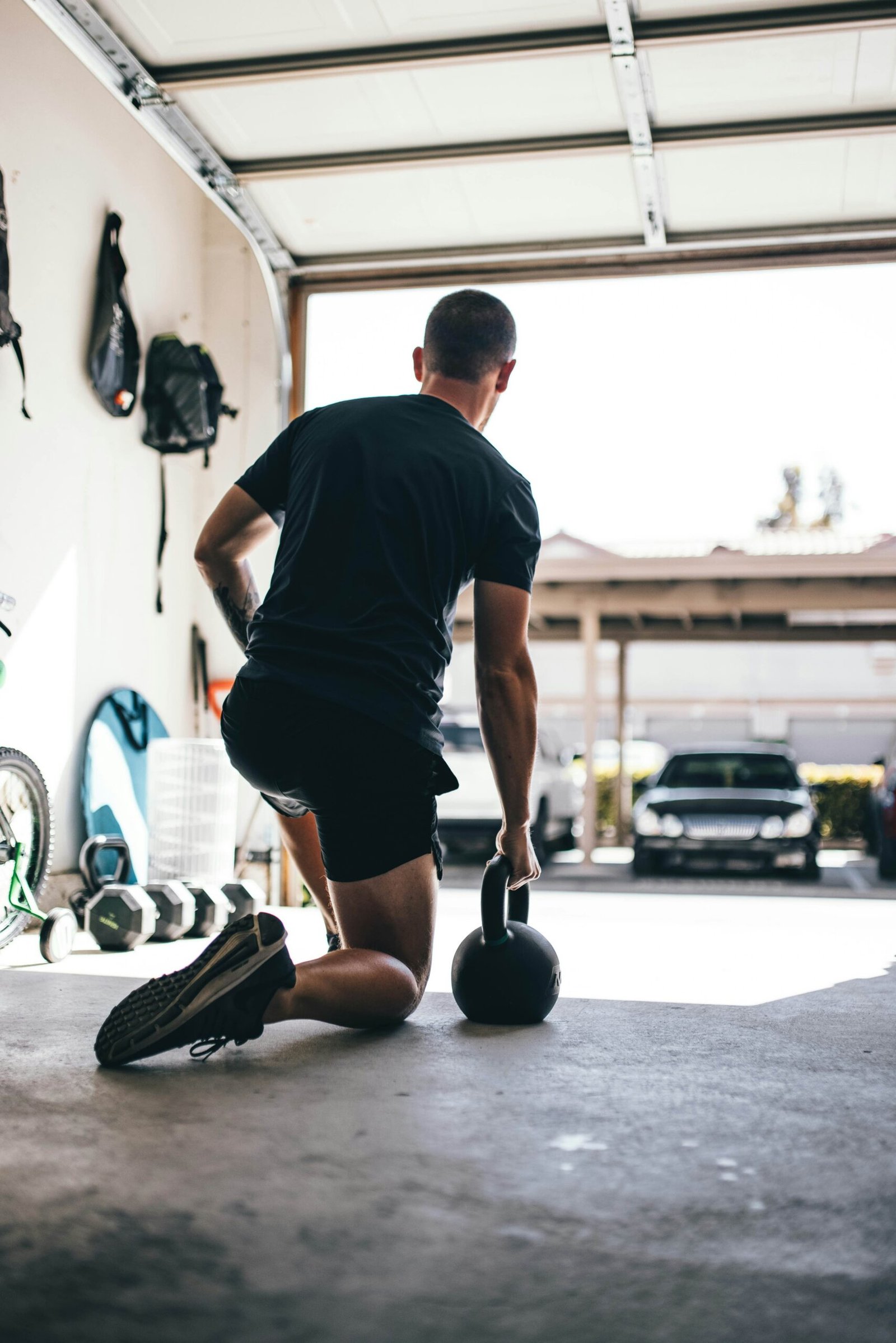
You don’t have to spend six days a week at the gym to get stronger and build muscle. With a good full body workout plan, you can train all your major muscle groups a few times each week and still have time to recover.
This method is great for beginners, busy people, or anyone who likes a simple workout routine. Just pick effective exercises, focus on good form, and slowly make your workouts harder over time.
What Is a Full Body Workout Program?
A full body workout trains most of your major muscle groups in one session. Instead of splitting up chest, back, and leg days, you work several movement patterns together each time you train.
A balanced workout usually has a squat or lunge, a hip-hinge move, an upper-body push, an upper-body pull, and a core exercise. This way, you work your chest, back, shoulders, arms, legs, glutes, and core without needing lots of different exercises.
What Are the Benefits of Full Body Training?
One big benefit of a full body workout is flexibility. You can train just two or three times a week and still work all your main muscle groups regularly.
Full-body workouts also make your schedule simpler. Instead of planning lots of different sessions for each body part, you repeat a few key moves and work on getting better at them.
Research shows that both full-body and split routines can help you get stronger and build muscle if you do a similar amount of work. A 2024 review found no big difference between split and full-body training for muscle growth or strength when the total training volume was the same.
How Often Should You Do Full Body Workouts?
If you’re just starting out, doing a full body workout two or three days a week, with rest days in between, is a good way to begin.
For example:
Monday: Workout A
Wednesday: Workout B
Friday: Workout C
This schedule also aligns well with the Physical Activity Guidelines for Americans, which recommend that adults perform muscle-strengthening activities involving all major muscle groups on at least two days per week.
Taking rest days between tough workouts helps your muscles recover and get stronger.
7 Best Exercises for a Full Body Workout Program
1. Squat
Squats mainly work your quads and glutes, and they also use other muscles to keep you stable. If you’re new, start with a goblet squat before moving on to harder versions.
2. Romanian Deadlift
The Romanian deadlift works your hamstrings, glutes, and other muscles along the back of your body. Practice the hip-hinge movement with a weight you can handle before going heavier.
3. Bench Press
The bench press targets your chest, shoulders, and triceps. If you don’t have a barbell, you can use dumbbells or do push-ups instead.
4. Row
Rows with a barbell, dumbbells, machine, or cables all work as horizontal pulling exercises. They mainly target your back muscles and also use your arms.
5. Overhead Press
The overhead press mostly works your shoulders and triceps, and it also makes your core stay stable. Using dumbbells is a good option for beginners instead of a barbell.
6. Lat Pulldown or Pull-Up
Lat pulldowns or pull-ups add a vertical pulling movement to your workout. If you’re new, the adjustable weight on a lat pulldown is often easier to handle.
7. Farmer’s Carry
Farmer’s carries test your grip and make your core and other muscles work to keep you steady as you walk.
You don’t have to do every exercise. Pick the versions that fit your ability, equipment, mobility, and experience.
3-Day Full Body Workout Program
This full body workout plan gives you three balanced sessions. If you’re a beginner, start with weights you can handle and focus on learning the right technique.
Day 1: Workout A
| Exercise | Sets × Reps |
| Back Squat or Goblet Squat | 3 × 6–10 |
| Dumbbell Bench Press | 3 × 8–12 |
| Lat Pulldown | 3 × 8–12 |
| Romanian Deadlift | 2 × 8–12 |
| Plank | 2–3 × 20–60 sec |
Day 2: Workout B
| Exercise | Sets × Reps |
| Romanian Deadlift | 3 × 6–10 |
| Overhead Press | 3 × 8–12 |
| Seated Cable Row | 3 × 8–12 |
| Split Squat | 2 × 8–12 per leg |
| Farmer’s Carry | 2–3 rounds |
Day 3: Workout C
| Exercise | Sets × Reps |
| Leg Press or Squat | 3 × 8–12 |
| Bench Press | 3 × 6–10 |
| Pull-Up or Lat Pulldown | 3 × 8–12 |
| Hip Thrust | 2 × 8–12 |
| Dead Bug or Plank | 2–3 sets |
Always warm up before your main sets. If you’re new, you don’t need to push every set to the limit. Focus on good technique first.
How Much Weight Should You Use?
Pick a weight that feels tough on the last few reps, but still lets you keep good form.
A good rule is to end most sets feeling like you could do two or three more reps with control. If you’re aiming for 8–12 reps but your form slips at seven, lower the weight.
As you get stronger, slowly add more weight to your workouts.
How Long Should You Rest Between Sets?
How long you rest depends on the exercise and how hard the set was. For tough moves like squats, presses, and Romanian deadlifts, resting 2–3 minutes is a good place to start.
For smaller exercises or easier sets, resting 1–2 minutes is usually enough. Studies show that longer rests can help you keep up your performance, especially during tough resistance workouts.
Don’t rush just to finish your workout faster.
How to Progress Your Full Body Workout Program
Progressive overload means slowly making your workouts harder so your muscles keep getting challenged.
Suppose your target is 8–12 repetitions. You might perform:
Week 1: 10 kg × 8 reps
Week 2: 10 kg × 10 reps
Week 3: 10 kg × 12 reps
When you can do 12 reps with good control, add a little more weight and start back at the lower end of your rep range.
You can make progress by adding more reps, more weight, or more sets. Don’t let your form slip just to lift heavier.
Full Body Workout vs. Split Routine
Both training styles can be effective.
| Full Body Training | Split Training |
| Major muscle groups trained each session | Muscle groups divided across sessions |
| Often convenient for 2–3 days/week | Often used with more weekly training days |
| Simple scheduling | More time for individual muscle groups |
| Useful for many beginners | Useful when higher training volume is desired |
A full body workout program is not automatically better than a split routine. The 2024 meta-analysis mentioned earlier found similar strength and hypertrophy outcomes when training volume was matched.
What matters most is being consistent, putting in effort, recovering well, and making your workouts harder over time—not what you call your workout split.
Can You Build Muscle With a Full Body Workout?
Yes, a well-designed full body workout can help you build muscle.
Resistance training provides the stimulus, while adequate nutrition and recovery support adaptation. Protein also matters. A large meta-analysis published in the British Journal of Sports Medicine found that protein supplementation can enhance gains in muscle size and strength during prolonged resistance training, with benefits leveling off around a total daily intake of approximately 1.6 g of protein per kilogram of body weight for many healthy adults. (Morton et al., 2018)
You don’t have to train a muscle every day to see progress.
Common Full Body Workout Mistakes
Doing too much is a common mistake. You don’t need 15 or 20 exercises in every full body workout to get good results.
Don’t add weight too fast, train every set to failure, skip rest days, ignore your form, or change your routine every week. If you’re new, avoid copying high-volume plans made for advanced lifters.
Give yourself time to get comfortable with your exercises and keep track of your progress.
How Long Should a Full Body Workout Take?
Most people can finish a full body workout in about 45 to 75 minutes, but there’s no set time you have to follow.
How long your workout takes depends on how many exercises and sets you do, your rest breaks, warm-up, equipment, and experience. A focused 50-minute session can be better than two hours spent unfocused at the gym.
Frequently Asked Questions
Is a 3-Day Full Body Workout Program Enough?
Yes. Three well-planned workouts can train all your main muscle groups a few times each week and still leave you with days to recover.
Can I Do Full Body Workouts Every Day?
Most beginners don’t need tough full-body workouts every day. Taking rest between hard sessions helps you recover and train better.
How Many Exercises Should a Full Body Workout Have?
About five to seven good exercises can cover all the main movement patterns. Doing more exercises doesn’t always mean better results.
Can Beginners Follow a Full Body Workout Program?
Yes. A simple full body workout is great for beginners because it lets you practice key movements often without needing to go to the gym every day.
Should I Do Cardio on Rest Days?
You can add cardio if it fits your goals and you recover well. Walking or moderate cardio is a good choice on days you’re not lifting. Just don’t do so much intense exercise that it gets in the way of your recovery.
Final Thoughts
A good full body workout doesn’t need to be complicated or take six days a week. Focus on the main movement patterns, start with weights you can handle, use good form, and make steady progress.
For most beginners, doing three workouts a week with rest days in between is a simple way to build strength and muscle. Stick to your plan, eat well, get enough sleep, and let your body adjust.
Helpful YouTube Resource
Here’s a helpful video:
References
1. U.S. Department of Health and Human Services — Physical Activity Guidelines for Americans, 2nd Edition
Guidelines for aerobic exercise and muscle-strengthening activity.
https://health.gov/sites/default/files/2019-09/Physical_Activity_Guidelines_2nd_edition.pdf
2. Ramos-Campo DJ, et al. — Efficacy of Split Versus Full-Body Resistance Training
Systematic review and meta-analysis comparing full-body and split resistance-training routines for strength and muscle growth.
https://pubmed.ncbi.nlm.nih.gov/38595233/
3. American College of Sports Medicine — Resistance Training Guidelines
Evidence-based resources covering resistance exercise, physical activity, and fitness.
https://www.acsm.org/education-resources/trending-topics-resources
4. Morton RW, et al. — Protein Supplementation and Resistance Training
Systematic review and meta-analysis examining protein supplementation, muscle mass, and strength during resistance training.
https://bjsm.bmj.com/content/52/6/376
5. U.S. Centers for Disease Control and Prevention — Physical Activity Basics
Recommendations for adult aerobic and muscle-strengthening activity.
https://www.cdc.gov/physical-activity-basics/guidelines/adults.html

Hi, I’m Kristi Jenkins, a passionate blogger and content writer with a love for storytelling. With years of experience in writing engaging and insightful articles, I focus on topics like mental health, lifestyle, and personal growth. My goal is to create content that inspires, educates, and connects with readers on a deeper level.