Now Reading: 7 Benefits of Clove Oil on Skin and How to Use It
-
01
7 Benefits of Clove Oil on Skin and How to Use It

Clove oil has become a popular ingredient in natural skincare. People use it hoping to manage pimples, dryness, dark spots, and signs of aging. However, not every claim you see online has strong scientific support.
The potential benefits of clove oil on skin mainly come from eugenol, the major active compound in clove essential oil. Laboratory research shows that eugenol has antioxidant, antimicrobial, and anti-inflammatory activity. At the same time, it can irritate or sensitize skin.
That makes proper use particularly important if you want to add clove oil to your skincare routine.

What Is Clove Oil?
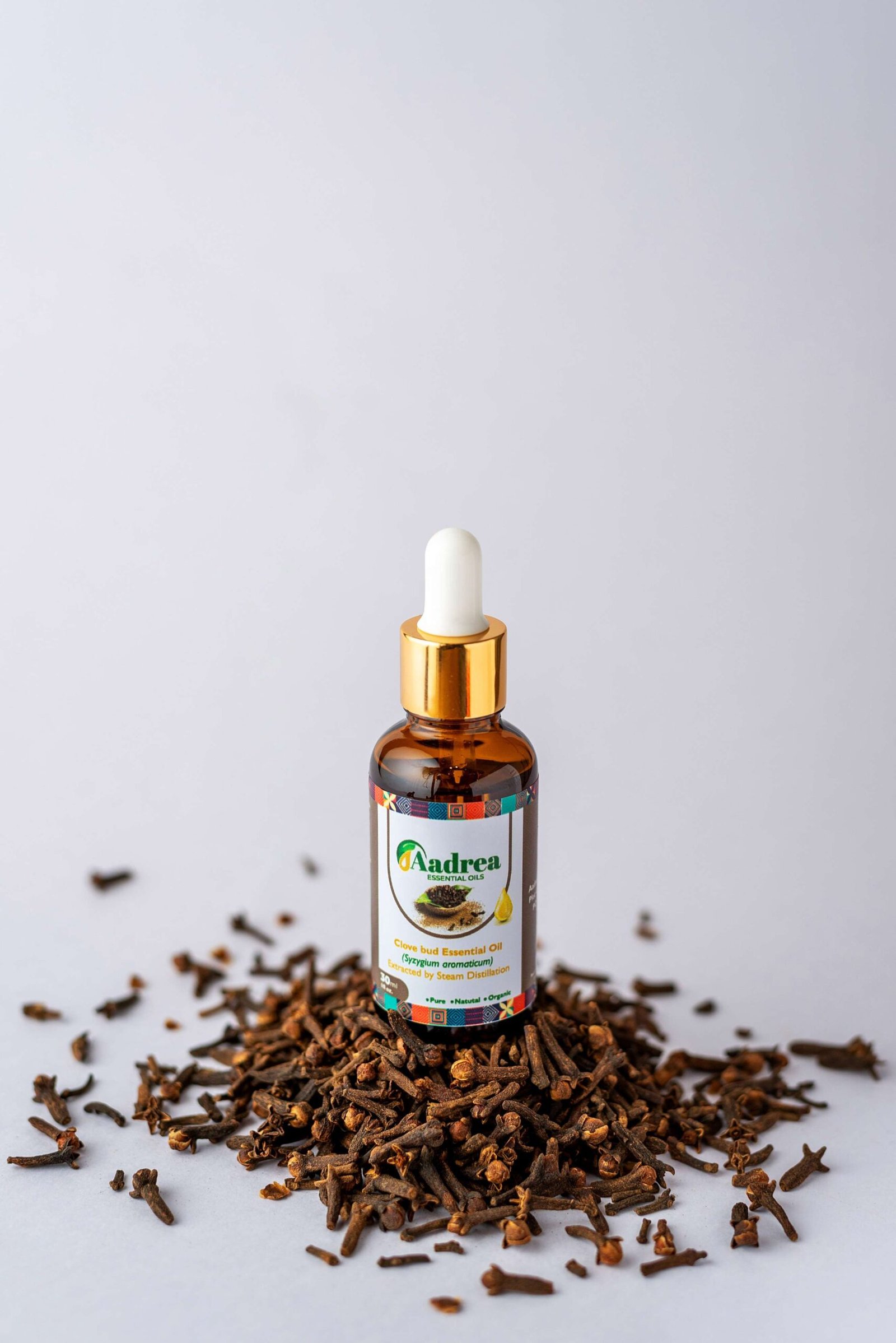
Clove essential oil comes from the clove plant, Syzygium aromaticum. It has a powerful spicy smell and is widely used in fragrances, cosmetics, dental preparations, and other products.
According to the NIH LiverTox database, eugenol accounts for approximately 70% to 90% of the aromatic oil extracted from cloves. This compound is responsible for many of the properties researchers associate with cloves.
Clove essential oil is very different from whole cloves or clove water. Because it is highly concentrated, you should not apply pure clove essential oil directly to your face.
7 Potential Benefits of Clove Oil on Skin
1. Has Antimicrobial Properties
One of the most researched potential benefits of clove oil on skin is its antimicrobial activity.
Laboratory studies have found that eugenol can act against different microorganisms. Research testing 59 essential oils against microorganisms relevant to dermatological conditions identified eugenol as an important marker associated with antimicrobial activity.
These results make clove oil interesting for skincare research. However, laboratory antimicrobial activity does not mean you should use clove oil to treat a bacterial or fungal skin infection at home.
2. May Have Potential for Acne-Prone Skin
The possible benefits of clove oil on skin are often discussed in relation to acne.
There is some scientific reasoning behind this interest. Acne involves bacteria and inflammation, among several other factors, and eugenol has antimicrobial and anti-inflammatory properties. Researchers have even investigated eugenol as one component of multi-ingredient anti-acne formulations.
However, this does not establish pure or diluted clove oil as a clinically proven acne treatment.
The American Academy of Dermatology recommends established acne treatments such as benzoyl peroxide and retinoids, depending on the type and severity of acne.
3. Provides Antioxidant Activity
Antioxidant potential is another of the interesting benefits of clove oil on skin.
Eugenol has demonstrated antioxidant activity in experimental research. Antioxidants help control oxidative reactions involving unstable molecules known as free radicals.
Oxidative stress is involved in many biological processes, including those associated with skin aging. However, an ingredient showing antioxidant activity in a laboratory does not prove that putting it on your face will erase wrinkles or prevent aging.
Clove oil should therefore not replace proven skincare habits such as sun protection.
4. May Have Anti-Inflammatory Potential
Eugenol has also attracted attention for its anti-inflammatory properties.
Research using human neutrophils found antioxidant and anti-inflammatory effects. Interestingly, the same research also found cytotoxic effects on keratinocytes and identified eugenol as a skin irritant.
This highlights an important point about the benefits of clove oil on skin: an ingredient can have potentially useful biological properties and still cause unwanted reactions.
Do not use clove essential oil to self-treat eczema, psoriasis, rosacea, or unexplained skin inflammation.
5. May Help Dry Skin When Combined With a Carrier Oil
Clove essential oil itself is not a moisturizer.
However, you need to mix it with a suitable carrier oil before putting it on skin. Oils such as jojoba, squalane, or argan oil can soften the skin and help reduce moisture loss.
As a result, a diluted clove-oil mixture may leave dry skin feeling softer.
It is important to give the carrier oil credit for much of this effect. The benefits of clove oil on skin should not be exaggerated by attributing every effect of an oil blend to cloves.
6. May Complement a Healthy-Skin Routine
Clove oil’s antioxidant and antimicrobial properties make it an interesting cosmetic ingredient when professionals formulate it at an appropriate concentration.
However, healthy-looking skin depends on much more than one essential oil.
Gentle cleansing, moisturizing, avoiding unnecessary irritation, eating a balanced diet, and protecting your skin from excessive UV exposure all matter.
The AAD recommends using a broad-spectrum, water-resistant sunscreen with SPF 30 or higher when outdoors.
For long-term skin health, sunscreen has far stronger evidence than DIY essential-oil treatments.
7. Can Be Used in Professionally Formulated Skincare
Another practical way to experience potential benefits of clove oil on skin is through professionally formulated products.
Formulators can control the concentration of clove-derived ingredients and combine them with other components designed for a specific skincare purpose.
That is different from putting several drops of pure essential oil directly on your face.
If you have sensitive skin, choosing a tested skincare product is generally a more cautious approach than experimenting with concentrated homemade mixtures.
Can Clove Oil Help With Acne?
Clove oil has demonstrated antimicrobial properties, and researchers have explored eugenol as part of experimental acne formulations.
But there is not enough high-quality clinical evidence showing that applying clove essential oil by itself effectively treats human acne.
This matters because clove oil can also irritate skin. Irritation may make already inflamed acne more uncomfortable.
The AAD lists evidence-based topical options including benzoyl peroxide and retinoids for appropriate acne cases. If acne is painful, cystic, persistent, or causing scars, consider seeing a dermatologist rather than relying on essential oils.
Does Clove Oil Remove Dark Spots?
Dark-spot removal is one of the commonly advertised benefits of clove oil on skin, but evidence for this claim is weak.
There is no strong clinical evidence showing that clove oil reliably removes melasma, sun spots, or post-acne hyperpigmentation.
In fact, irritating your skin can make pigmentation more troublesome. The AAD notes that acne inflammation and picking can increase the risk of dark spots known as post-inflammatory hyperpigmentation.
If dark spots are your main concern, daily sun protection and evidence-based pigmentation treatments are better options.
Does Clove Oil Reduce Wrinkles?
Eugenol’s antioxidant activity often leads to claims that clove oil is an anti-aging treatment.
The connection is not that simple.
Antioxidant activity in experimental research does not prove that topical clove essential oil visibly reduces wrinkles in humans.
If premature aging concerns you, sun protection remains one of the most important steps. The AAD recommends broad-spectrum SPF 30 or higher, along with shade and protective clothing.
Therefore, wrinkle removal should not be listed among the proven benefits of clove oil on skin.
How to Use Clove Oil on Skin Safely
Always Dilute Clove Essential Oil
Never apply undiluted clove essential oil directly across your face.
Clove oil contains a high concentration of eugenol, which can irritate skin.
If you choose to experiment with clove oil, use only a very low concentration in a suitable carrier oil. For facial skincare, using less is safer than assuming a stronger mixture will produce better results.
Patch Test First
Before using a new clove-containing product more widely, test it cautiously on a small area of skin.
Watch for burning, redness, itching, swelling, or a rash.
Eugenol is a known contact sensitizer. A 2023 study involving people with eugenol contact allergy found that some participants reacted at very low concentrations during patch testing.
Stop using the product if irritation develops.
Avoid Sensitive Areas
Keep clove essential oil away from your eyes, eyelids, lips, inside the nose, and broken or irritated skin.
Do not assume that “natural” means gentle enough for every part of your body.
Clove Oil Side Effects on Skin
The potential benefits of clove oil on skin need to be balanced against its risks.
Clove oil may cause redness, burning, itching, irritation, or allergic contact dermatitis. Cases of allergic contact dermatitis caused by eugenol and clove oil have been reported.
People already sensitized to eugenol may react even to relatively low concentrations.
Repeatedly applying a product that makes your skin sting or turn red is not a sign that it is “working.” It is a reason to stop using it.
Who Should Avoid Clove Oil on Skin?
People with very sensitive skin, a known fragrance or eugenol allergy, active eczema, rosacea, broken skin, or ongoing dermatitis should be especially cautious.
People with severe or inflamed acne should also avoid experimenting with irritating essential oils without professional advice.
Extra caution makes sense when using essential oils on young children or during pregnancy and breastfeeding.
If you already see a dermatologist for a skin condition, ask before adding clove essential oil to your treatment routine.
Clove Oil vs. Proven Skincare Ingredients
| Skin Concern | Clove Oil | Better-Supported Approach |
| Acne | Limited clinical evidence | Benzoyl peroxide/retinoids |
| Dark spots | Limited evidence | Sunscreen + targeted treatment |
| Wrinkles | Limited evidence | Sunscreen/retinoids |
| Dryness | Not a moisturizer itself | Moisturizer/barrier-supporting products |
| Skin infection | Lab antimicrobial activity | Appropriate medical treatment |
Natural ingredients can have useful properties, but treating a skin condition requires more than laboratory evidence.

Frequently Asked Questions
What are the main benefits of clove oil on skin?
Potential benefits of clove oil on skin include antimicrobial, antioxidant, and anti-inflammatory activity. However, much of the evidence comes from laboratory research rather than large human clinical trials.
Can I apply clove oil directly to my face?
No. Pure clove essential oil contains high concentrations of eugenol and can irritate skin. Dilution and cautious use are important.
Is clove oil good for acne?
Clove oil has antimicrobial properties, but there is insufficient clinical evidence to recommend it as a standard acne treatment. Established acne treatments have much stronger evidence.
Does clove oil remove dark spots?
There is no strong clinical evidence that clove oil reliably removes dark spots or hyperpigmentation.
Does clove oil make your skin glow?
“Glowing skin” is not a specific medical outcome, and there is no strong evidence that clove oil directly brightens skin.
Can clove oil reduce wrinkles?
Eugenol has antioxidant activity, but clove oil has not been proven to visibly reduce human wrinkles.
Can I leave clove oil on my face overnight?
Leaving DIY essential-oil preparations on facial skin for long periods may increase exposure and irritation. A properly formulated skincare product is a more cautious choice.
Final Thoughts
The potential benefits of clove oil on skin mainly come from eugenol’s antimicrobial, antioxidant, and anti-inflammatory properties. These qualities make clove oil interesting for cosmetic and dermatological research.
However, clove oil is not a proven acne cure, wrinkle treatment, or dark-spot remover. It can also irritate and sensitize your skin.
If you want to explore the benefits of clove oil on skin, avoid applying pure essential oil directly to your face. Keep your routine gentle and rely on evidence-based treatments when you are dealing with an actual skin condition.
Helpful YouTube Resource
Here’s a helpful video:
References
1. NIH LiverTox — Eugenol (Clove Oil)
The NIH resource explains the composition and known biological properties of clove oil and eugenol.
Read NIH LiverTox
2. Eugenol as a Promising Molecule for the Treatment of Dermatitis
The study examined eugenol’s antioxidant and anti-inflammatory properties while also reporting skin-irritating and keratinocyte effects.
View the study on PubMed
3. Antimicrobial Activity of Essential Oils Against Dermatologically Relevant Pathogens
Researchers tested 59 essential oils and identified eugenol as an important compound associated with antimicrobial activity.
View the research on PubMed
4. American Academy of Dermatology — Acne Diagnosis and Treatment
Provides dermatologist-reviewed guidance on established acne treatments and sun protection.
Read the AAD acne treatment guide
5. American Academy of Dermatology — Tips for Managing Acne
Discusses acne care, post-inflammatory hyperpigmentation, irritation, and SPF 30+ sun protection.
Read the AAD acne skincare guide
6. Allergic Reactivity to Different Dilutions of Eugenol
A 2023 human study examined reactions to different eugenol concentrations in people with contact allergy.
View the study on PubMed
7. Occupational Allergic Contact Dermatitis From Eugenol and Clove Oil
A published case report documents allergic contact dermatitis associated with eugenol and clove oil exposure.
View the report on PubMed

Hi, I’m Kristi Jenkins, a passionate blogger and content writer with a love for storytelling. With years of experience in writing engaging and insightful articles, I focus on topics like mental health, lifestyle, and personal growth. My goal is to create content that inspires, educates, and connects with readers on a deeper level.