Now Reading: Recovery Workout: 8 Active Recovery Exercises for Rest Days
-
01
Recovery Workout: 8 Active Recovery Exercises for Rest Days
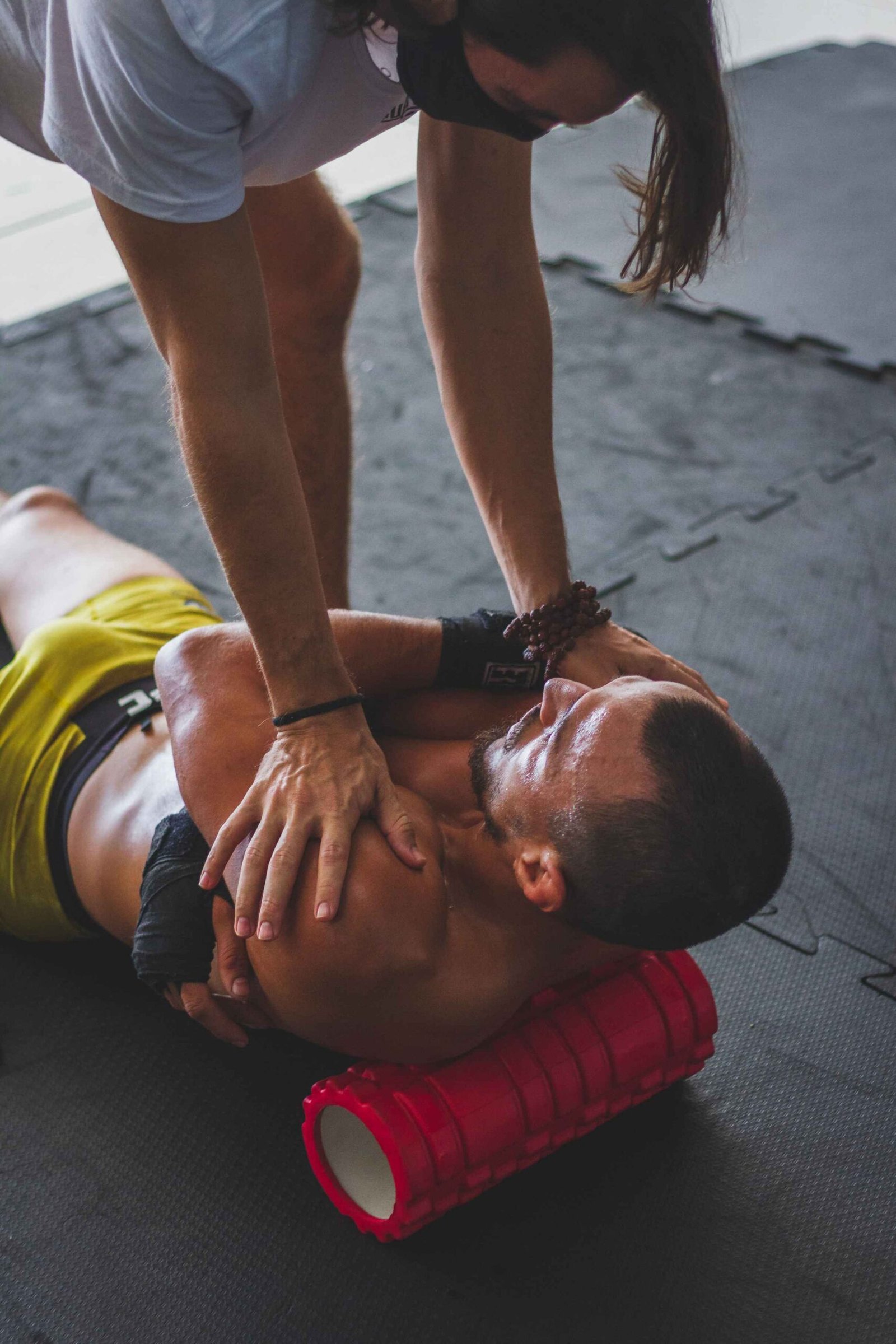
A recovery workout is simply a light movement session between your tougher training days. This 20-minute routine mixes easy walking with seven gentle mobility exercises, using a sturdy chair and a wall. You can make it shorter if you want, or just take a full rest day.
The goal is to keep movement comfortable, not to make your day feel like another tough workout. There are no jumps, weights, or floor exercises. Here, “recovery” means taking it easy between workouts, not recovering from an injury or substance use disorder.
You can download the printable 20-minute routine after reading the instructions below. The timings include time to change positions and rest, so you don’t need to do nonstop repetitions or hold stretches for a long time.
What is active recovery and how easy should it actually feel?
The ACE (American Council on Exercise) defines active recovery as movement at a substantially lower workload than the activity you’re recovering from. A rest day session should therefore be measured against what is easy for you, not against the pace of some other individual.
For this one just keep your breathing comfortably easy for an unhurried conversation. Keep it very small and pause as much as you like. If you start off on a step count, if you start to feel like you’re working hard, a deep stretch etc then just scale it back.
After a harder session like our beginner boxing session at home you might well opt for a gentle walk or one of the movements below on another day. You don’t need to do the full sequence to make the choice worthwhile.
Should you be moving or taking a full rest day?
Think about how ordinary movement feels before you go for a routine. If you’re just feeling like you want to move about a bit, a simple walk around the room may be all you need. If you’re feeling knackered or unwell then just skip it. A rest day doesn’t necessarily need to involve exercise.
Do not use this routine to test a new injury or push through pain. Stop and seek appropriate advice for a new or worsening problem. AAOS’s safe-exercise guidance advises medical assessment for severe pain, inability to move or bear weight on an injured area, or symptoms that persist.
If you already have an injury, a medical condition, have had recent surgery or have instructions from your doctor restricting movement then you should ask your health professional which activities are appropriate. A one size fits all rest day plan is of no use in place of your own specific rehabilitation advice.
How does the 20 minute recovery workout work?
Use a stable chair with no wheels (one that won’t slide about), positioned so that your feet can rest on the floor. Allow plenty of space to walk in. Wear secure footwear and keep water to hand. A wall is of course useful for the final stretch.
This is an original editorial schedule, not a tested recovery protocol. A number of the movements are based on the NHS sitting exercises and flexibility exercises. The short repetition suggestions below are just starting points for this easy session, not a requirement to do a full exercise programme.
| Time | Movement | What to do within the time slot |
| 0:00–5:00 | 1. Easy walking | Begin slowly and keep the pace comfortable |
| 5:00–7:00 | 2. Seated ankle pumps | Try 5 slow movements per foot, then pause |
| 7:00–8:00 | 3. Shoulder rolls | Try 5 small backward rolls, then relax |
| 8:00–10:00 | 4. Seated upper-body turns | Try 3 gentle turns per side, with pauses |
| 10:00–12:00 | 5. Seated chest stretch | Try 3 brief holds, relaxing fully between them |
| 12:00–14:00 | 6. Seated hip marching | Try 5 small lifts per leg, then pause |
| 14:00–16:00 | 7. Standing side bends | Try 3 shallow bends per side |
| 16:00–18:00 | 8. Supported calf stretch | Try 1–2 brief holds per side |
| 18:00–20:00 | Easy walking again | Repeat movement 1 at a relaxed pace to finish |
There are eight separate exercises (walking comes in again at the end). If you’ve done a few comfortable reps before a slot runs out, just take the remainder of the time off or go ahead and finish early. Don’t just add reps to fill the clock.
What are the eight active recovery exercises you can try?
1. Easy walking
Walk on a level, familiar surface at a pace you could comfortably maintain whilst talking. Take small, relaxed steps. If it’s easier to do so, choose a short indoor route so that you can turn back or sit down if you need to.
Keep the first 5 minutes easy rather than gradually building up to a brisk workout. If your gait changes, the pain increases or you feel unwell at any point then stop. Only do a short, comfortable walk at the end if you still want to be moving.
2. Seated ankle pumps
Sit up straight and hold the sides of the chair. One leg can be comfortably straightened with the foot off the floor. Slowly point the toes away, then bring them in. Do five of these, lower the leg and switch.
Don’t hold the leg up if that’s becoming tiring. You can rest between sides or indeed just omit that movement altogether. The two minute slot is plenty of time to get into the chair, swap legs and just take a break.
3. Shoulder rolls
With arms relaxed, just lift your shoulders, roll them back in a circle and then let them settle. Do five or so small rolls and then rest. The point is to keep the movement very comfortable rather than attempting the biggest circle you can.
Oxford University Hospitals have shoulder rolls as part of their seated exercise programme (page 10 of the printed material). Their clinical programme is separate to that. The short slot here is just an opportunity for some very gentle movement.
4. Seated upper-body turns
Sit with your feet planted and arms crossed over your chest. Keep your hips facing forwards and simply turn your upper body left. Stop for up to 5 seconds (as comfortable as you like), return to the middle and then turn right. Do three each way.
Use a range that is comfortable. You don’t need to pull on the chair, you don’t need to reach behind you, you don’t need to force a deep rotation. If it causes you any discomfort just skip the turn.
5. Seated chest stretch
Sit up straight, shoulders back and down, arms gently open to the sides. Let your chest lift slightly until you feel a very slight stretch. Hold for about 5 seconds, relax and repeat up to three times.
Keep the opening small and don’t arch your lower back to make it bigger. If the arm position is uncomfortable just leave it out rather than force your shoulders into position.
6. Seated hip marching
Hold the chair sides, lift one bent knee a tiny bit and then lower the foot very quietly. Alternate legs for up to 5 lifts each. Keep your torso upright and the movement slow.
Use a low lift rather than attempting to get to a specific height. This is just a brief movement break within the session, not a leg strength set. Stop the set if you need to lean back, hold your breath or feel you’re straining.
7. Standing side bends
Stand with feet about a hip’s width apart and arms at your sides. Slide one hand a short way down the leg without twisting. Hold for about two seconds, get back to upright and change sides. Do three bends each way.
Keep it shallow. If you’re having any doubts about your standing balance then just skip the exercise (don’t go and invent a deeper seated version to make up for it). You can use that time to rest or finish the session early.
8. Supported calf stretch
Face a wall with your hands on it. Step one foot back, keeping the heel down and the knee quite comfortably straight. Slight bend in the front knee until you feel a gentle stretch in the calf. Try a 10-15 second hold, release and switch sides.
One or two holds per side is all that’s required for this session. Adjust the distance from the wall rather than forcing the heel down. The stretch shouldn’t be one that requires you to bounce or push through pain.

Does a recovery workout get rid of soreness?
Don’t expect these exercises to prevent or indeed to eliminate DOMS. A Cochrane review of stretching and DOMS found no clinically important reduction in soreness in healthy adults. The evidence included was of low to moderate quality and the review was on stretching per se.
Choose gentle movement because it’s comfortable and fits in with your day, not because you’ve got to do it in order to recover properly. A moment of feeling looser is quite different to demonstrating that an injury has healed or that you’re ready for hard training.
If there’s any significant soreness, if it’s affecting your movement in any way or if you’re at all in any doubt as to whether something is actually wrong then stop all the experimenting with the exercises and get appropriate advice.
Can you shorten or alter the routine?
Yes. Try a few minutes of walking and one seated exercise, then decide whether you’d like to carry on. You can of course skip any exercise you like, take longer breaks or just stop before you’ve reached the 20 minute mark. There is no minimum score you have to achieve.
If you’re already comfortable cycling or swimming and prefer to do those then talk about how you can keep them genuinely easy as part of your training plan. The cardio activity guide has a number of options listed but the name of the activity in itself doesn’t necessarily mean it’s appropriate for a rest day. The effort, the length and your own circumstances are still the deciding factors.
For your normal training days our full body workout guide will explain a separate resistance training structure. There’s a clear distinction to be made between having a light day and having another training session.
How often should you do active recovery?
There is no prescribed weekly frequency in this article at all. It’s down to you based on your own training schedule, your own energy levels, your own normal movement and whatever professional advice you’re already following. A hard session doesn’t in any way automatically mean you need to do this the very next day.
If your ‘easy’ days are invariably turning into demanding sessions then simply make them easier. Take a shorter route, leave the timer off or just schedule a day with no workout at all. You don’t have to make every rest day a productive one through exercise.
When should you stop and get help?
Stop if you have pain, dizziness, unusual breathlessness or feel unwell. Seek urgent medical attention for chest pain, fainting or severe breathing difficulty. Get an injury assessed if you’re unable to bear weight, if you have severe pain or if your symptoms are not improving.
If you need any help in selecting or modifying movements then a qualified physiotherapist or some other appropriate health professional can look at your circumstances. Take a specific observation with you such as a movement that’s painful or a change in your gait.
The printable is just a reminder of the sequence, it’s not a reason to finish it. On a rest day an early finish can be the perfect end to the plan.
Sources
- American Council on Exercise: Training Recovery. Active versus passive recovery terminology; its broader physiological and superiority claims are not used as evidence for this routine.
- NHS: Sitting exercises. Stable-chair setup, ankle movement, seated turns, chest stretch and hip marching. Repetitions here are reduced editorial starting options.
- NHS: Flexibility exercises. Standing side-bend and wall-supported calf-stretch technique.
- Oxford University Hospitals: Seated Exercise Programme, printed page 10. Shoulder-roll movement; the source’s clinical programme is not reproduced or prescribed here.
- AAOS OrthoInfo: Safe Exercise. Injury precautions and reasons for assessment.
- Cochrane: Stretching to prevent or reduce muscle soreness after exercise. Limits of stretching for delayed-onset soreness in healthy adults; not a trial of this sequence.

Hi, I’m Kristi Jenkins, a passionate blogger and content writer with a love for storytelling. With years of experience in writing engaging and insightful articles, I focus on topics like mental health, lifestyle, and personal growth. My goal is to create content that inspires, educates, and connects with readers on a deeper level.