Now Reading: How Often Should You Do Pilates? A Practical Guide for Real Results
-
01
How Often Should You Do Pilates? A Practical Guide for Real Results

Pilates is now a popular workout around the world. It helps improve posture, builds core strength, and boosts mental focus. Still, many people wonder: how often should you do Pilates to see real results?
The answer depends on your goals, experience, and how well you recover. The Centers for Disease Control and Prevention (CDC) recommends that adults get at least 150 minutes of moderate exercise each week (CDC Guidelines: https://www.cdc.gov/physicalactivity/basics/adults/index.htm). Pilates is a great way to help reach that goal.

This guide will show you how often to do Pilates based on your fitness level, weight loss goals, and overall health.
How Often Should You Do Pilates for General Fitness?
If your goal is overall health, the simple answer to how often you should do Pilates is two to three times per week.
This routine gives your muscles time to recover while you build strength and flexibility. Pilates works your core, posture, and stability, and these muscles need rest to get stronger.
Most instructors recommend spacing sessions throughout the week. For example, Monday, Wednesday, and Friday work well. When people ask, ” How often should you do Pilates for general wellness, consistency matters more than daily intensity.
How Often Should You Do Pilates to See Results?
Many beginners want quick results. Joseph Pilates famously said, “In 10 sessions you’ll feel the difference, in 20 you’ll see the difference, and in 30 you’ll have a whole new body.”
So realistically, how often should you do Pilates to notice changes?
If you practice three times per week, you may feel stronger within 2–4 weeks. Visible muscle tone often appears around 6–8 weeks. A study published in the Journal of Bodywork and Movement Therapies found that regular Pilates improved abdominal strength and flexibility after 8 weeks of consistent training.
If you’re wondering how often to do Pilates, remember that steady practice leads to lasting results.
How Often Should You Do Pilates to Lose Weight?
Weight loss depends on burning more calories than you eat, but Pilates can help with fat loss. So, how often should you do Pilates if you want to manage your weight?
Experts often recommend three to four sessions per week. According to the American Council on Exercise (ACE), a Pilates session can burn between 200 and 400 calories depending on intensity (ACE Fitness: https://www.acefitness.org).
However, Pilates by itself might not burn enough calories for big weight loss. If you want to lose weight, try combining Pilates with walking, cycling, or strength training for better results.
How Often Should You Do Pilates as a Beginner?
If you’re new to Pilates, start slowly. In your first month, focus on learning the right form rather than doing too many sessions.
Complete Beginners (0–4 Weeks)
Begin with two sessions a week. This helps your body adjust without causing too much soreness or tiredness.
Intermediate (1–6 Months)
At this stage, you can increase to three or four sessions weekly. If you’re wondering again how often you should do Pilates, this level offers more challenge while still allowing recovery.
Advanced (6+ Months)
If you’re advanced, you might do Pilates four to five times a week. Many advanced students switch up the intensity to avoid overtraining.
Is It Bad to Do Pilates Every Day?
Some people enjoy Pilates so much that they want to do it every day. But how often can you do Pilates without overdoing it?
Daily low-intensity mat Pilates is generally safe for healthy individuals. Pilates improves mobility and posture, which supports everyday movement. Research from the National Institutes of Health (NIH) shows Pilates can reduce chronic lower back pain when practiced consistently (NIH Study: https://www.ncbi.nlm.nih.gov).
However, high-intensity reformer sessions every day may strain muscles. If you choose daily sessions, vary intensity and focus areas.
Reformer vs. Mat: Does Frequency Change?
Another common question about how often you should do Pilates concerns equipment.
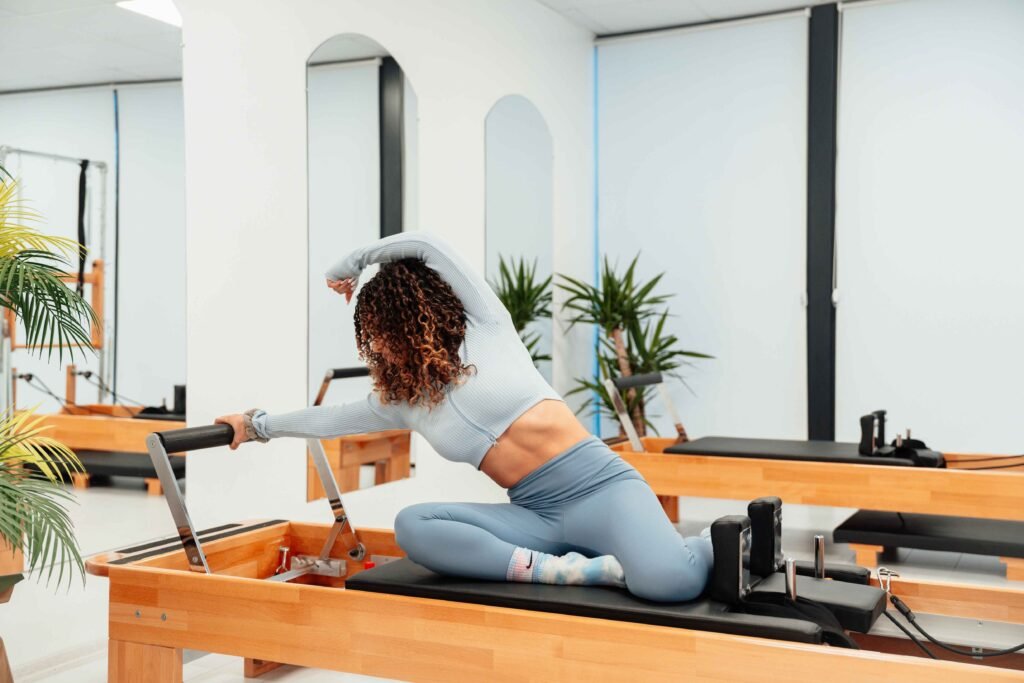
Reformer Pilates uses springs for resistance, which makes your muscles work harder. Because of this, you might need more recovery time than with mat Pilates.
Mat Pilates relies mostly on body weight. Many people can safely perform mat sessions more frequently.
When deciding how often to do Pilates, think about how hard each session is and how your body feels afterward.
How Often Should You Do Pilates With Strength Training?
Many people like to combine Pilates with weight lifting. So, how often should you do Pilates if you also lift weights?
The American College of Sports Medicine (ACSM) recommends strength training for major muscle groups 2 times per week (ACSM Guidelines: https://www.acsm.org).
A balanced weekly plan may look like this:
- Monday: Pilates
- Tuesday: Strength training
- Thursday: Pilates
- Saturday: Strength training
If you want to do Pilates along with weight training, two to three sessions a week works well for most people.
Sample Weekly Pilates Schedule
Here is a simple guide to answer how often you should do Pilates in practical terms:
Beginner Plan
- Tuesday: Pilates
- Friday: Pilates
Intermediate Plan
- Monday: Pilates
- Wednesday: Strength
- Friday: Pilates
Advanced Plan
- Monday: Pilates
- Wednesday: Pilates
- Friday: Pilates
- Sunday: Light mobility session
The best answer for how often to do Pilates depends on your recovery, energy, and personal goals.
What Happens When You Practice Pilates Regularly?
Doing Pilates regularly can improve your core strength, posture, and flexibility. It may also help lower stress. Mind-body exercises like Pilates support mental well-being by teaching you to breathe deeply and focus.s.
Over time, regular sessions improve balance and coordination. Many people notice reduced back discomfort. If you’re still wondering how often you should do Pilates, remember that steady practice two to four times per week produces meaningful results.
If you want guided sessions, check out beginner-friendly classes on Mady Morrison YouTube channel, which is well-known in the Pilates community:
Final Thoughts: Finding Your Ideal Pilates Frequency
So, how often should you do Pilates? For most people, doing it two to four times a week gives the best mix of results and recovery.
Listen to your body. Increase frequency gradually. Stay consistent rather than chasing perfection.
If you stay patient and keep at it, you’ll see why experts say regular Pilates builds strength, improves posture, and supports your long-term health.
References
- Centers for Disease Control and Prevention (CDC). Physical Activity Guidelines. https://www.cdc.gov/physicalactivity
- American Council on Exercise (ACE). Calorie Expenditure Research. https://www.acefitness.org
- American College of Sports Medicine (ACSM). Exercise Guidelines. https://www.acsm.org
- Journal of Bodywork and Movement Therapies. Pilates Strength Study.
- National Institutes of Health (NIH). Pilates and Back Pain Study. https://www.ncbi.nlm.nih.gov

Hi, I’m Kristi Jenkins, a passionate blogger and content writer with a love for storytelling. With years of experience in writing engaging and insightful articles, I focus on topics like mental health, lifestyle, and personal growth. My goal is to create content that inspires, educates, and connects with readers on a deeper level.