Now Reading: How to Help a Depressed Partner: A Compassionate Guide
-
01
How to Help a Depressed Partner: A Compassionate Guide

Loving someone with depression can be hard and confusing. You might want to help but not know what to say or do. Many people look for ways to help because they care and feel helpless seeing a loved one struggle.

Depression changes how people think, feel, and handle daily life. It also impacts relationships. Helping a partner with depression means supporting them without judging, encouraging care without pushing, and looking after your own well-being. With patience and understanding, you can help your partner and take care of yourself too.
Understanding Depression and How It Affects Relationships
Depression is a medical condition, not a personality flaw or lack of effort. According to the National Institute of Mental Health, more than 21 million adults in the U.S. experience major depressive episodes each year (NIMH).
Depression can lead to low energy, pulling away from others, irritability, and hopelessness. These symptoms can make it harder to talk and feel close. Knowing this can help you support your partner with empathy instead of frustration.
Signs Your Partner May Be Depressed
Emotional Signs
Your partner may seem sad, numb, or easily irritated. They may lose interest in things they once enjoyed or feel guilty without a clear reason.
Behavioral Signs
Depression often causes withdrawal. Your partner may avoid social events, stop communicating, or struggle with daily responsibilities.
Physical Signs
Changes in sleep, appetite, energy, or focus are common with depression. These symptoms are real, and your partner cannot just “snap out of” them.
The Impact of Depression on Romantic Relationships
Depression can make people feel distant from each other. You might talk less, have more misunderstandings, and feel less close. Partners can feel rejected or unimportant, even if that is not what the person with depression means.
Recognizing that depression is the problem—not your relationship—helps reduce resentment. This mindset is essential when learning how to help a depressed partner without damaging the bond you share.
How to Help a Depressed Partner in Supportive Ways
Helping a partner with depression takes compassion, patience, and realistic expectations.
Encourage Open and Honest Communication
Pick a calm time to talk. Ask gentle, open questions and let your partner share when they are ready. Try not to pressure them to explain everything.
Talking in a safe and caring way builds trust and helps your partner feel less alone.
Listen Without Trying to Fix Everything
Listening is more important than giving solutions. Let your partner talk without interrupting or correcting them. Show you understand by saying things like, “That sounds really hard.”
When someone feels heard, they feel less alone and more connected to you.
Validate Their Emotions
Validation means noticing your partner’s pain without judging them. Saying things like “I can see you’re struggling” shows you care.
Try not to say things like “just be positive” or “others have it worse.” Validating your partner’s feelings helps them feel understood.
Educate Yourself About Depression
Learning about depression reduces blame and confusion. Trusted sources like Mayo Clinic explain how depression affects mood and behavior (Mayo Clinic).
When you understand depression, it’s easier to be patient and not take symptoms personally.
Offer Practical Support
Small actions matter. Helping with meals, errands, or appointments reduces daily stress. Gentle routines also provide stability.
Practical support shows love without overwhelming your partner.
Encourage Professional Help Gently
Treatment can often help with depression. Therapy, medication, or both might be suggested. Encourage your partner to get help, but don’t force it.
The CDC says that treatment improves the quality of life for many people with depression (CDC). Gentle encouragement works better than giving ultimatums when you want to help your partner.
Avoiding Common Mistakes When Helping a Depressed Partner
Avoid blaming, lecturing, or comparing their pain to others. Do not assume love alone can cure depression.
Don’t ignore your own limits. You can help your partner and still take care of yourself. Keeping a balance is important for long-term support.
Don’t Forget to Take Care of Yourself, Too
Helping someone with depression can be emotionally tiring. Taking care of yourself is not selfish. It helps you stay present and supportive.
Make time for rest, exercise, hobbies, and social connections. Maintaining your own mental health strengthens your ability to practice how to help a depressed partner in healthy ways.
When Depression Becomes a Safety Concern
Depression and Suicide Risk
Depression raises the risk of suicide, especially if symptoms get worse. The World Health Organization says that more than 700,000 people die by suicide each year around the world (WHO).
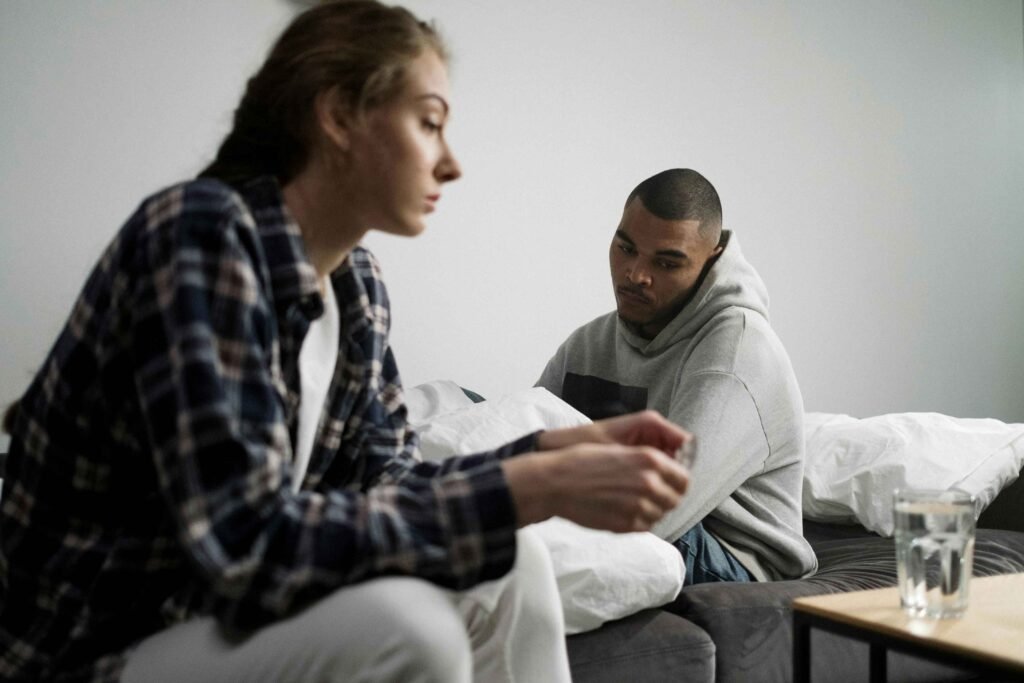
Warning signs can include feeling hopeless, pulling away from others, or talking about being a burden.
What to Do If You’re Worried
If you believe your partner may be in immediate danger, seek professional help right away. In the U.S., the 988 Suicide & Crisis Lifeline provides 24/7 support.
Taking action is very important when your partner’s safety is at risk.
Supporting Recovery as a Team
Recovery does not always move in a straight line. Some days will be better than others. Celebrate small steps and be patient.
Approaching recovery as a team builds trust and resilience. You do not need to have all the answers to offer meaningful support.
Final Thoughts on How to Help a Depressed Partner
Helping a partner with depression is a journey that takes compassion, patience, and understanding. You cannot fix depression, but you can support your partner with care. With learning, good communication, and support, healing and connection are possible.
Recommended YouTube Resource (Recognized Org)
Mayo Clinic – Supporting a Loved One With Depression
References
- National Institute of Mental Health (NIMH) – Depression
https://www.nimh.nih.gov - Mayo Clinic – Depression Overview
https://www.mayoclinic.org - Centers for Disease Control and Prevention (CDC) – Mental Health
https://www.cdc.gov - World Health Organization (WHO) – Suicide Prevention
https://www.who.int - SAMHSA – Mental Health Support
https://www.samhsa.gov

Hi, I’m Kristi Jenkins, a passionate blogger and content writer with a love for storytelling. With years of experience in writing engaging and insightful articles, I focus on topics like mental health, lifestyle, and personal growth. My goal is to create content that inspires, educates, and connects with readers on a deeper level.